
Conversational AI for Customer Service: Use Cases, Benefits, Challenges, and Costs

Learn how conversational AI improves customer service. Explore use cases, benefits, real challenges, implementation costs, and best practices.
Customer service has changed dramatically over the past decade. The days of purely human-driven support are fading. Today's customers expect answers immediately. They don't want to wait on hold or spend hours in email threads. They expect to interact with their service provider through the channel of their choice, at any hour, and have their issue resolved without friction.
This is where conversational AI for customer service becomes essential. It's not about replacing your support team with robots. It's about using intelligent automation to handle routine questions instantly, route complex issues to the right person, and give your human agents superpowers to solve problems faster. When implemented well, conversational AI creates better customer experiences while simultaneously reducing operational costs and freeing your team to focus on work that actually requires human judgment and creativity.
But getting there requires understanding what conversational AI can and can't do, how much it actually costs, what challenges come up in real deployments, and how to build something that feels helpful instead of frustrating. This guide breaks down everything you need to know.
What Is Conversational AI for Customer Service?
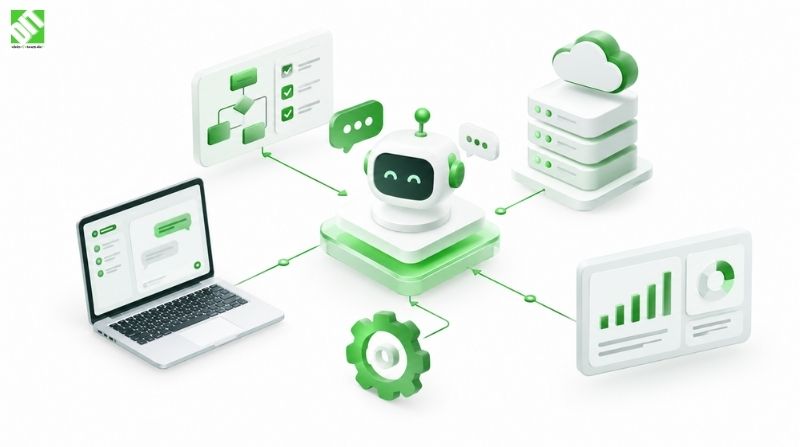
Conversational AI refers to technology that enables machines to understand, process, and respond to human language in a natural way. In a customer service context, it typically takes the form of chatbots, virtual assistants, or voice bots that can handle customer inquiries, troubleshoot issues, and escalate problems to human agents when necessary.
The difference between basic chatbots and modern conversational AI is significant. Traditional rule-based chatbots follow decision trees. If a customer writes "I need to reset my password," the bot looks for those exact words and responds with a password reset link. If the customer says "I forgot how to get into my account," the bot might not recognize the query and simply say "I don't understand."
Conversational AI powered by natural language processing (NLP) and machine learning understands intent rather than just keywords. It recognizes that "I need to reset my password" and "I forgot how to get into my account" mean essentially the same thing. It learns from thousands of customer interactions to understand context, disambiguate meaning, and provide relevant responses.
Modern conversational AI systems often use large language models that can maintain conversation context across multiple turns, understand nuance, and generate natural-sounding responses rather than pulling from predefined templates. This makes the interaction feel like talking to a person rather than navigating a computer system.
Why Conversational AI for Customer Service Matters Now
Customer expectations around service speed have shifted fundamentally. Research consistently shows that 60-70% of customers expect to get a response to their customer service question within an hour. Many expect answers within minutes. Your human support team can't possibly meet that demand across all channels and languages around the clock.
This creates a business challenge: How do you provide the speed and availability customers now expect without doubling your support budget?
Conversational AI addresses this directly. It's available 24/7. It handles multiple customers simultaneously. It doesn't get frustrated or tired. It learns from every interaction and improves over time. For the most common customer issues (password resets, checking order status, billing questions, tracking shipments), it can resolve problems immediately without human involvement.
Beyond speed, there's a cost argument. The average cost to manually handle a customer service inquiry ranges from $5 to $15, depending on the industry and complexity. Automating the simplest questions through conversational AI costs $0.01 to $0.05 per interaction. Even accounting for the development and maintenance costs of the system, the savings become significant at scale.
There's also a data advantage. Every conversation is logged and analyzable. You get insight into what customers actually need, what questions come up repeatedly, what products or features create confusion, and where your processes break down. This intelligence feeds directly into product improvements and more effective support processes.
Common Use Cases for Conversational AI in Customer Service
Conversational AI works best when deployed strategically for specific use cases rather than trying to make it handle every possible customer interaction from day one.
Password Resets and Account Access Issues
Among the most common customer service requests across industries. A customer forgets their password or can't log in. With conversational AI, they can verify their identity and reset their password without contacting a human agent. The system can walk them through multi-factor authentication, confirm recovery email addresses, or create temporary access codes. This issue that might take 10-15 minutes with a human support agent gets resolved in 90 seconds.
Order and Shipment Tracking
Ecommerce companies field constant questions about where orders are and when they'll arrive. Conversational AI can instantly look up order status, provide tracking information, estimate delivery dates, and proactively notify customers of delays. For food delivery applications, ride-sharing platforms, or subscription services, this use case becomes even more valuable since status inquiries spike during peak usage periods.
FAQ and Knowledge Base Queries
Most customer service teams maintain extensive documentation about their products, policies, and processes. Conversational AI can index this knowledge and serve answers instantly rather than routing every question to a human. Questions about return policies, warranty coverage, shipping costs, cancellation procedures, or product features get answered immediately with current information.
Billing and Subscription Management
Customers want to update their payment method, change subscription tiers, apply discounts, or understand their invoice without calling a support line. Conversational AI can verify identity, access billing systems, and execute many of these transactions directly. It can also explain charges, process refunds within predefined parameters, or escalate disputes to specialized teams.
Product Recommendations and Upselling
If you understand what a customer has purchased, what they've browsed, and what they're asking about, you can make relevant recommendations. Conversational AI can have natural conversations with customers about their needs and suggest relevant products or services. This increases order value while providing genuine customer value.
Support Ticket Routing and Triage
Every customer inquiry doesn't need to reach a human immediately. Conversational AI can gather context, understand the issue, collect relevant information, and route to the right specialist. A billing inquiry goes to your billing team. A technical issue goes to engineering support. A complaint about damaged products goes to your quality assurance team. Pre-loaded with context, your specialists can resolve issues much faster.
After-Hours and First-Response Support
Even with round-the-clock human teams, there are gaps. Conversational AI can provide immediate acknowledgment and triage during off-hours, then pass complete context to the day shift. A customer who messages at 2 AM gets an immediate response, feels heard, and knows their issue is queued for the right team when they come online.
Benefits of Conversational AI for Customer Service
The business advantages compound when conversational AI is implemented properly.
Dramatically Improved Response Time
Conversational AI responds in seconds. There's no queue, no wait time, no business hours limitation. For time-sensitive issues (tracking a delivery that was supposed to arrive today, verifying fraud alerts on an account, checking membership status before an event), this speed matters enormously. Customers who get instant answers rather than waiting hours for human response report significantly higher satisfaction.
24/7 Availability Across All Time Zones
A customer in Singapore having an issue at 3 AM can get help immediately. Your support team can sleep. Conversational AI doesn't require shift work, doesn't call in sick, and doesn't require rotation schedules. This global availability is especially valuable if your product serves international customers.
Reduced Support Costs
This is the metric most companies focus on. If conversational AI handles 40-50% of incoming customer inquiries (a realistic number when implemented well), you reduce your support headcount needs or redeploy that team to higher-value work. At scale, this translates to millions in annual savings.
Consistent Response Quality
Every customer gets the same accurate information. There's no variation based on which agent handles their issue. It won't forget details or give conflicting information. For standardized issues, consistency is actually preferable to human variation.
Proactive Customer Service
Instead of waiting for customers to reach out, conversational AI can proactively reach customers. It can notify them about order delays before they ask, remind them about account security best practices, suggest relevant products based on their past behavior, or alert them to billing issues before they become problems.
Rich Data About Customer Needs
Every conversation is data. You see which questions come up most frequently, which products confuse customers, where your documentation is unclear, what customers want but can't find. This intelligence directly improves product development, documentation, and support processes.
Improved Human Agent Effectiveness
Your support team becomes more effective when they're handling only complex issues. They get context from the conversational AI about what the customer already tried, what their history is, what the core issue actually is. They can focus on problem-solving rather than information gathering.
Scalability Without Linear Cost Increase
Adding 1,000 more customer inquiries per day doesn't require hiring more agents. Conversational AI scales horizontally. Adding capacity is a matter of better training data and model improvement, not hiring and onboarding new people.
Real Challenges in Conversational AI Customer Service
Despite the benefits, conversational AI deployments face legitimate obstacles that many companies underestimate.
Understanding Context and Nuance
Not every customer interaction is straightforward. A customer might ask "Why are you so expensive?" which requires understanding their specific situation, their alternatives, and what they actually value. A customer might say "Your app never works" when they mean a specific feature fails under particular conditions. Conversational AI struggles with subtle context that humans pick up naturally.
Handling Frustrated or Angry Customers
An angry customer needs empathy, acknowledgment of their frustration, and solution-oriented response. Conversational AI can be programmed to de-escalate and show sympathy, but it often feels robotic. Customers can quickly tell they're talking to a bot and become more frustrated. The experience of being forced to interact with automation when you're already unhappy drives negative emotions.
Knowing When to Escalate
The hardest decision conversational AI faces is knowing when it's in over its head. If it keeps trying to help when the issue exceeds its capability, the customer wastes time and becomes frustrated. If it escalates too readily, it defeats the purpose of automation. Finding the right threshold is project-specific and requires tuning over time.
Language and Cultural Variation
"Cheers" means something very different in British English than in American English. Idioms, slang, regional expressions, and cultural norms vary. A phrase that's friendly in one culture might be inappropriate in another. Supporting multiple languages doesn't just mean translation. It means understanding cultural context across different markets.
Handling Ambiguity
Customers are often unclear about what they actually need. "I have a problem with my order" could mean lost in transit, wrong items, damaged goods, late delivery, or billing error. Conversational AI needs to ask clarifying questions, but asking too many feels like frustration. Not asking enough means providing irrelevant help.
Integration with Backend Systems
Conversational AI lives in the cloud, but customer information lives in your CRM, billing system, knowledge base, and inventory management platform. Getting real-time access to all this data while maintaining security and privacy is technically complex. If the AI can't verify identity or access current information, it can't actually resolve problems.
Training Data Quality and Bias
Conversational AI learns from historical data. If your support team's past interactions reflect biases, discriminate against certain customer types, or contain outdated information, the AI inherits those problems. Training data quality directly impacts output quality.
Maintaining Relevant Knowledge
Your products change. Policies update. Features get added or removed. New edge cases emerge. The conversational AI's knowledge needs constant updates. If it's telling customers outdated information, it becomes a liability rather than an asset.
Customer Preference and Trust
Some customers simply don't want to interact with bots. They want human connection. This is especially true for high-value customers, complex problems, or when they're already frustrated. Forcing them through a chatbot first damages the relationship.
Types of Conversational AI Solutions for Customer Service
Different architectural approaches exist for different needs.
Rule-Based Chatbots
The simplest option. Rules define exactly what the system does. "If customer says X, respond with Y." Easy to build and control, but inflexible. Any phrasing outside the exact patterns fails. These work for very simple use cases but frustrate users quickly.
Retrieval-Based Systems
The bot has a predefined set of possible responses. Given user input, it selects the best response from its library. It can't generate novel responses. It's more flexible than pure rule-based systems but still limited. Common in FAQ bots and simple Q&A systems.
Generative AI Chatbots
Built on large language models, these systems generate novel responses based on training data rather than selecting from predefined options. They understand context better, handle variation in input, and feel more natural. This is the cutting edge but requires significant training data and computational resources. These systems can also hallucinate information or make mistakes.
Hybrid Approaches
Many production systems combine multiple approaches. Use rules for high-stakes transactions (money transfer, security changes). Use retrieval-based systems for knowledge lookup. Use generative AI for initial conversation and triage. This balances reliability with naturalness.
Agentic AI Systems
The newest approach involves AI systems that can think through problems step by step, break complex issues into smaller parts, call multiple tools, and iterate toward solutions. Instead of responding immediately, an agentic system might think "The customer needs to update their address. First, I need to verify their identity. Then, I need to check their account. Then, I need to update the system. Then, I need to confirm the change." This requires more sophisticated technology but handles complex workflows.
Understanding Conversational AI Customer Service Costs
Building and running conversational AI systems involves multiple cost components that often surprise organizations.
Development and Implementation
Building a basic chatbot for a small set of use cases might cost $20,000 to $50,000. This includes gathering requirements, designing conversations, building the technical system, and initial training. More sophisticated systems with multiple channels (web, messaging apps, voice), complex integration requirements, or extensive customization can easily exceed $100,000.
For enterprise systems handling hundreds of thousands of interactions daily with multiple languages, custom features, and tight integration with existing systems, development costs often reach $250,000 to $500,000+.
These costs include initial setup but not ongoing maintenance, which comes separately.
Training Data and Model Development
Quality training data is expensive. You need hundreds or thousands of real customer conversations to train effective natural language models. This data needs labeling and annotation. Domain experts need to review training data for accuracy. For specialized industries (healthcare, finance, legal), this becomes even more expensive because only people with specific expertise can properly label data.
Developing custom models on top of large language models, fine-tuning for your specific domain, and ongoing model improvement typically runs $15,000 to $50,000+ per year depending on scope.
Infrastructure and Hosting
Conversational AI systems require computing resources to run language models, store data, and handle concurrent users. Basic systems on shared cloud infrastructure might cost $500 to $2,000 per month. Larger systems with specific performance requirements might reach $5,000 to $15,000+ monthly.
During peak usage periods (holiday shopping, after a major incident), costs can spike as systems automatically scale up.
Integration and Custom Development
Connecting conversational AI to your existing systems requires custom development. Integrating with your CRM, connecting to your knowledge base, linking to your billing system, accessing inventory data, and enabling transactions all require custom development work. Plan $10,000 to $50,000+ for comprehensive integrations.
Ongoing Maintenance and Monitoring
After launch, someone needs to monitor performance, review conversations for quality, identify where the system fails, update knowledge as information changes, retrain models with new data, and fix bugs. Small teams might handle this with 0.5-1 FTE. Larger deployments need dedicated teams. Budget $5,000 to $20,000+ monthly for ongoing support.
Third-Party Platform Fees
If you use platforms like Dialogflow, Microsoft Bot Framework, Amazon Lex, or specialized customer service AI platforms, you pay licensing fees. These typically range from $100 to $1,000+ monthly depending on usage and features.
Typical Total Cost Ranges
Putting this together, here's what organizations typically spend:
Small implementation (basic FAQ bot, single channel, limited integration): $30,000 to $80,000 initial, $2,000 to $5,000 monthly ongoing
Mid-market system (multiple channels, moderate customization, CRM integration): $80,000 to $200,000 initial, $5,000 to $12,000 monthly ongoing
Enterprise deployment (multiple languages, complex workflows, extensive integrations, dedicated support team): $200,000 to $500,000+ initial, $15,000 to $30,000+ monthly ongoing
Return on investment typically appears within 12-24 months for well-designed systems, primarily through reduction in support headcount and increased customer satisfaction.
Best Practices for Implementing Conversational AI in Customer Service
Successful deployments follow certain patterns. Unsuccessful ones typically ignore these.
Start with High-Volume, Low-Complexity Use Cases
Don't try to automate your entire customer service function immediately. Identify the 3-5 use cases that represent 40-50% of your current inquiries and that are relatively straightforward. Password resets, order status, billing questions, basic FAQs. Get good at these first. Success builds momentum and organizational support for expanded deployment.
Focus on Customer Experience, Not Cost Savings
Yes, cost reduction matters. But if you implement conversational AI with the goal of cutting support costs and it delivers a frustrating experience, you'll damage customer relationships. Build systems focused on genuinely helping customers faster. Cost savings follow naturally. But pursuing cost savings directly often produces bad systems.
Design Clear Escalation Paths
The moment conversational AI realizes it can't help, it should escalate to a human agent with full context. The transition should be seamless. The customer shouldn't have to repeat their issue. Your agents should see a transcript of everything the bot already tried. Design this handoff carefully.
Invest in Training Data
The quality of your conversational AI system depends directly on training data quality. Real conversations from your actual customers, properly labeled and reviewed by domain experts, matter far more than generic training data. Invest here.
Monitor Quality Relentlessly
Review conversations regularly. Track which interactions resolved successfully and which failed. Identify patterns in failure. An AI system that's confidently providing wrong information is worse than no system. Monitoring matters.
Respect User Preferences
Make it easy for customers to switch to human agents. Don't hide the "talk to a person" button. Some customers will always prefer humans. Forcing them through a bot first damages relationships.
Update Knowledge Constantly
As your product changes, as policies update, as new issues emerge, your conversational AI needs updated information. This isn't a set-it-and-forget-it system. Neglected systems quickly become liabilities.
Communicate Transparently
Let customers know they're talking to AI. This sets expectations. Customers who think they're talking to a human and discover it's a bot feel deceived. Transparency builds trust.
Technology Stack Considerations
Implementing conversational AI requires several technology components working together.
Natural Language Processing Engine
This is the core that understands human language. You can build this from scratch (expensive, requires expertise), use open-source libraries like NLTK or spaCy (free but requires significant customization), or use commercial NLP platforms like those from Google, Microsoft, or AWS (pre-built, easier, but less flexible).
Large Language Model
The brain that generates responses. You can fine-tune existing models (GPT-3, Claude, LLaMA), build custom models from scratch (expensive, requires large datasets), or use specialized customer service models. Model selection impacts both performance and cost.
Conversation Management System
This tracks conversation state, manages multi-turn interactions, handles context, and decides what to say next. Platforms like Rasa, Botpress, or commercial solutions handle this. You can also build custom solutions if you have specific requirements.
Integration Layer
APIs and connectors that link conversational AI to your CRM, knowledge base, billing system, inventory, and other business applications. This is often the most complex part technically and requires custom development.
Analytics and Monitoring
Systems that log conversations, track performance metrics, identify failure points, and provide dashboards showing system health. Most platforms include basic analytics. Enterprise deployments often add custom analytics.
Multi-Channel Support
The UI layer that lets customers interact via web, messaging apps (WhatsApp, Facebook Messenger), voice, SMS, or other channels. Building this yourself is complex. Using existing platforms with multi-channel built-in is simpler.
The specific technology stack depends on your requirements, but well-designed systems typically involve a combination of commercial platforms and custom development rather than building everything from scratch.
How Conversational AI Works: The Process
Understanding how conversational AI actually processes and responds to customer queries helps you understand what's possible and what isn't.
User Input Reception
A customer writes or says something. This input is captured as text (or transcribed from audio in voice systems).
Preprocessing and Tokenization
The system breaks the input into components. "Can I change my billing address?" becomes separate tokens: "Can", "I", "change", "my", "billing", "address". This helps the system understand structure.
Intent Recognition
The system determines what the customer actually wants. Multiple phrasings might all have the same intent (address change, billing update, account modification). This is where natural language understanding happens.
Context Retrieval
The system accesses relevant context. It looks at the customer's history, their current account status, relevant knowledge base articles, similar previous interactions. This is where integration with backend systems matters.
Response Generation or Selection
The system decides what to say. In rule-based or retrieval systems, it selects from predefined responses. In generative systems, it constructs a novel response based on training data. In hybrid systems, it might combine approaches.
Confidence Scoring
The system evaluates its own confidence in the response. If confidence is high, it responds. If confidence is low, it might ask clarifying questions, gather more information, or escalate to a human.
Execution
If the response involves an action (resetting a password, updating an address, processing a refund), the system performs that action by calling backend systems.
Response Delivery
The response is formatted for the channel (text for web, spoken for voice, formatted message for WhatsApp) and delivered to the customer.
Conversation Logging
The entire interaction is logged for quality monitoring, compliance, training future models, and analytics.
This process happens in seconds or less. The smoother each step works, the better the customer experience.
Industry-Specific Applications of Conversational AI
Different industries benefit from conversational AI in different ways.
Ecommerce and Retail
Customers need order tracking, return processing, product recommendations, and frequently want to talk to someone before buying. Conversational AI handles pre-purchase questions, guides customers to products, tracks orders, and manages returns without human involvement. Retail companies deploying this see 30-40% reduction in support inquiries.
SaaS and Software
Technical support consumes enormous resources in software companies. Conversational AI can handle password resets, billing inquiries, feature explanations, and basic troubleshooting. It escalates technical issues to qualified engineers. This lets your support team focus on actually solving complex problems.
Financial Services
Banks and financial companies need 24/7 support, especially during crises (system outages, fraudulent transactions). Conversational AI can verify identity, handle account inquiries, dispute claims, and transfer funds within predefined limits. Regulatory requirements (knowing your customer, transaction verification) actually make AI attractive since every interaction is logged and auditable.
Healthcare
Patient questions about appointments, medications, billing, and general health information consume healthcare provider resources. Conversational AI can answer common questions, help schedule appointments, handle insurance inquiries, and provide health information. In crisis situations (patient concern about symptoms), it can collect information and alert staff appropriately.
Telecommunications
Mobile carriers and internet providers face massive support loads. Plan questions, billing issues, technical problems, and account changes drive enormous volume. Conversational AI handles routine inquiries, reducing customer wait times and human agent load significantly.
Travel and Hospitality
Hotels, airlines, and travel services need to handle booking questions, cancellations, changes, and customer concerns across thousands of properties and routes. Conversational AI provides immediate responses and can process changes without human involvement.
Measuring Success of Conversational AI Customer Service
Before launching, define how you'll measure success. These metrics matter.
Resolution Rate
What percentage of customer inquiries does the system resolve without human escalation? This is the most direct measure of effectiveness. Industry averages range from 30-50% for well-designed systems. The best systems sometimes exceed 60%.
Customer Satisfaction (CSAT)
Customers should be satisfied interacting with AI. Typical satisfaction scores for conversational AI customer service range from 3.5 to 4.5 out of 5. If scores are lower, something's wrong.
Response Time
How quickly does the system respond? Instant (under 1 second) is the standard. Any delay above 2-3 seconds typically frustrates users.
Escalation Rate
What percentage of interactions escalate to human agents? This should decrease over time as the system learns and improves. Tracking escalation reasons (unable to understand, unable to help, customer requested human) tells you where to improve.
Cost Per Interaction
Conversational AI should dramatically reduce this compared to human support. Typical savings are 70-85% per automated interaction.
Customer Effort Score
How much work did the customer have to do? Lower is better. Ideal is that the customer simply asked their question and got the answer without explaining further or answering clarifying questions.
Repeat Contact Rate
Do customers come back with the same issue again? High repeat contact indicates the system didn't actually resolve the problem. This should be low for resolved interactions.
Employee Satisfaction
Your support team should feel that conversational AI makes their work better, not worse. Systems that create additional work for humans generate resistance. Systems that give them better tools to solve complex problems generate support.
Common Mistakes That Organizations Make
Learning from common failures saves time and money.
Launching with Insufficient Training Data
Many organizations build conversational AI with generic training data or insufficient real customer interactions. The system sounds plausible but gives incorrect answers. This damages trust. Invest in real training data first.
Not Planning for Ongoing Maintenance
Conversational AI isn't something you build and leave alone. It requires constant updates, monitoring, and improvement. Organizations that stop investing post-launch often see performance degrade over 6-12 months.
Trying to Automate Everything at Once
Ambition is good, but trying to automate every possible customer interaction from launch guarantees failure. Start narrow and expand.
Focusing Only on Cost Reduction
Systems built purely to cut costs often feel cheap. They frustrate customers and get little usage. Build for customer experience first.
Poor Escalation Experience
The transition from bot to human is critical. If customers feel they've wasted time talking to a bot before reaching a human, frustration increases. Design this handoff carefully.
Ignoring Customer Feedback
Customers will tell you what's wrong with your system. Listen. Use that feedback to improve. Systems that ignore user input stagnate.
Insufficient Security and Privacy Controls
Conversational AI handles sensitive customer data. Security and privacy breaches are catastrophic. Build this in from the start, not as an afterthought.
Future Trends in Conversational AI Customer Service
The technology continues to evolve rapidly.
Multimodal Interactions
Future systems will understand text, voice, images, and video simultaneously. A customer could send a photo of a damaged product and ask "Can you help?" The system would analyze the image, understand the context, and determine how to help.
Deeper Personalization
Systems will leverage customer history more effectively to provide hyper-personalized service. They'll know what products you use, what issues you typically have, what communication style you prefer, and optimize responses accordingly.
Proactive Service
Instead of waiting for customers to contact you, systems will reach out proactively. Anticipating problems before they happen, offering assistance before customers ask, and preventing issues rather than just solving them.
Better Emotion Recognition
Systems will detect customer emotions more accurately (frustration, anger, happiness, confusion) and respond appropriately. This enables better de-escalation and more empathetic responses.
Seamless Handoff to Specialized Agents
The distinction between conversational AI and human agents will blur. The same interface will provide answers from AI or route to specific human specialists depending on what works best. Customers won't need to know whether they're talking to AI or human.
Regulatory Compliance Integration
Systems will automatically ensure compliance with regulations. In financial services, healthcare, and other regulated industries, conversational AI will handle consent, verification, disclosure, and audit trail requirements automatically.
Integration with Advanced Analytics
Beyond simple chatbot analytics, systems will provide deep business intelligence about customer needs, product issues, market trends, and competitive threats gleaned from conversation data.
Building vs. Buying Conversational AI Solutions
Organizations typically face a build-versus-buy decision.
Build Your Own
Building from scratch gives you complete customization and control. You're not dependent on vendor roadmaps or pricing changes. You own all your data. But building requires expertise in machine learning, NLP, software engineering, and customer service. Time to launch is measured in months or years. Cost is substantial. This makes sense only for large organizations with specific, unique requirements that existing solutions don't address.
Use Existing Platforms
Platforms like Dialogflow, Intercom, Zendesk, or Freshdesk provide conversational AI with much less custom development. You get to launch faster and with lower cost. Trade-offs include less customization, data stored in vendor systems, and dependency on vendor decisions. For most organizations, this is the right choice.
Hybrid Approach
Many sophisticated organizations use existing platforms for the core conversational AI system but add custom development for specific integrations, unique use cases, or highly specialized domain knowledge. This balances speed-to-launch with customization.
Work with Specialized Partners
Conversational AI consulting firms can help you avoid mistakes, guide technology selection, and build custom solutions efficiently. This adds cost but reduces risk for organizations without internal expertise.
When Conversational AI Might Not Be the Right Choice
Despite all the benefits, conversational AI isn't appropriate for every situation.
Conversational AI works poorly when interactions are highly complex, nuanced, or require deep empathy. Legal consultations, complex medical diagnoses, or handling highly distressed customers often need human judgment. Use conversational AI as a first filter and escalation mechanism, not the final solution.
Conversational AI struggles with truly novel problems. If customers are consistently contacting you about issues your business has never encountered, conversational AI can't solve what you've never documented. It works best in mature processes with consistent, recurring issues.
If your customer base strongly prefers human interaction, forcing them through a chatbot first damages relationships. Some premium or B2B customers want human contact from the start. Respect those preferences.
If your business model depends on customer conversations as a competitive advantage (consulting, premium support, luxury service), replacing those conversations with automation might damage your brand.
If you lack the internal capability to maintain and improve the system, building conversational AI creates a liability that decays over time.
How to Get Started with Conversational AI for Customer Service
If you've decided conversational AI makes sense for your business, where do you start?
Define Clear Objectives
What problems are you solving? What success looks like? How will you measure it? Write this down. Most failed implementations drift because the original objectives were vague.
Audit Current Customer Service
Where does your team spend most time? Which inquiries frustrate agents? Which repeat most frequently? Which could be automated? Data matters more than assumptions.
Select Initial Use Cases
Pick 2-3 high-volume, relatively simple use cases. These are your early wins. They build momentum and organizational support for broader deployment.
Choose Your Approach
Build, buy, hybrid, or partner? Based on your resources and requirements, select the path that makes sense.
Plan Integration Requirements
Map what systems your conversational AI needs to connect to. CRM, billing, knowledge base, inventory, whatever matters for your use cases. This integration complexity often exceeds technology complexity.
Prepare Your Team
Your support team needs to understand what's coming, why, and how it will change their work. Get them involved in design. Their frontline perspective is invaluable.
Design Training Data Collection
If you're building custom systems, plan how you'll collect, label, and manage training data. Existing customer interactions are your best resource.
Expect Iteration
Launch version 1.0 as an MVP (minimum viable product). Get it in front of real users quickly. Learn. Iterate. Improve based on actual usage rather than theoretical assumptions.
The implementation timeline typically runs 3-6 months for well-planned projects, though initial planning and decision-making often takes 1-2 months before work even begins.
The Role of AI development in Building Conversational Solutions
Implementing conversational AI for customer service isn't purely software engineering. It requires expertise in multiple disciplines. Machine learning specialists need to understand your domain. Software engineers need to understand customer service. Product managers need to understand both the technology and the business.
Many organizations lack this combination of skills internally. Building effective conversational AI requires expertise in natural language processing, machine learning model development, software architecture, systems integration, and customer service domain knowledge. When these skills don't exist internally, working with specialized partners who have demonstrated expertise becomes valuable.
Partners who specialize in this space have built multiple systems across different industries. They've seen what works, what fails, and what common pitfalls to avoid. They have established patterns, libraries, and integrations that accelerate development. They can avoid mistakes that would take an inexperienced team months to discover.
Integration with Existing Business Systems
Conversational AI only delivers value when it connects to systems that actually drive outcomes. A chatbot that can answer questions but can't actually update your CRM or process transactions isn't very useful.
Effective integration with custom software development approaches means building connectors to your existing systems, ensuring data flows bidirectionally, maintaining security and privacy throughout the integration, and handling edge cases where systems disagree or data is inconsistent.
For most organizations, this integration layer represents 40-50% of the actual development effort. Understanding this upfront prevents budget surprises.
Handling Edge Cases and Failures Gracefully
Even the best conversational AI systems encounter situations they can't handle. Customers ask unusual questions. Novel problems emerge. External systems fail temporarily.
How the system handles these failures determines whether you've improved customer experience or degraded it. Failures handled gracefully (quick escalation to a human with full context, honest acknowledgment that the system can't help, offering alternatives) leave customers feeling like the system tried to help even when it couldn't.
Failures handled poorly (attempting to help when you can't, providing incorrect information, losing context during escalation) frustrate customers more than if there had been no automation.
Organizational Change and User Adoption
The technology works, but organizational change matters more. Your support team needs to accept conversational AI as a tool that helps them, not threatens them. Customers need to trust the system. Management needs to understand it as an investment, not just a cost-reduction initiative.
Change management for conversational AI implementation includes training, communication, governance (who decides when the system is ready to deploy, when to pull it back, how to respond if it causes problems), and continuous feedback mechanisms.
Organizations that invest in change management alongside technology implementation typically see much better outcomes than those focused purely on the technical solution.
Measuring ROI and Long-Term Value
The financial case for conversational AI typically looks something like this:
Assumption: 50% of your current customer service inquiries are high-volume, low-complexity issues that conversational AI can handle. Your current cost per interaction is $8. Your current volume is 100,000 inquiries monthly.
Calculation: 50,000 automated inquiries × $8 saved per inquiry = $400,000 monthly benefit. Annual benefit: $4.8 million.
Against this, factor in: Development costs ($150,000 to $300,000), annual platform and infrastructure costs ($30,000 to $60,000), annual maintenance and improvement ($40,000 to $80,000).
Net annual benefit in year one: $4.5 to $4.7 million. Payback period: less than one month.
In years two and beyond, benefits are the full $4.8 million minus ongoing costs, since development is complete.
These numbers assume reasonable implementation. Poor implementation might achieve only 25-30% automation rate, cutting benefits roughly in half but not eliminating the ROI.
The longer-term value includes improved customer satisfaction (which drives retention and expansion), better data about customer needs (which drives product improvements), and reduced support team burnout (which improves retention and morale).
Conclusion: When Is Conversational AI Right for Your Business?
Conversational AI for customer service is no longer a speculative technology. It's proven, deployed widely, and increasingly expected by customers. The question isn't whether conversational AI works. It's whether it makes sense for your specific situation.
Conversational AI makes sense if you handle high volumes of similar customer inquiries, if your current support costs are substantial, if you need 24/7 global availability, if you want to improve customer satisfaction by reducing wait times, or if you want better data about what customers actually need.
Conversational AI probably isn't the right immediate priority if your customer service volume is small, if your interactions are highly complex and unique, if your customers are hostile to automation, or if you lack the resources to implement and maintain it.
If you determine that conversational AI is worth exploring, start with clear objectives, select specific use cases, and plan for ongoing investment and iteration. The systems that deliver real value are built and maintained thoughtfully, not thrown together quickly as cost-cutting measures.
The business case is compelling. Implementation requires expertise. Success requires ongoing commitment. Getting these three things aligned is what separates implementations that deliver transformative value from those that disappoint.
Discussing your specific situation with technology partners who specialize in building conversational AI solutions can help clarify whether this makes sense for your business, what's involved in implementation, what timeline is realistic, and what investment is required. These conversations often reveal opportunities or obstacles that aren't obvious when looking at the technology in isolation.
The future of customer service involves increasingly intelligent automation handling routine work, freeing human specialists to focus on genuinely complex problems. Conversational AI is the bridge technology that makes this transition possible.
Frequently Asked Questions
How accurate is conversational AI in understanding customer intent?
Accuracy depends on the system and use case. Well-trained systems typically understand customer intent correctly 85-95% of the time. For simple, common use cases (password reset, order tracking), accuracy is high. For complex, ambiguous queries, accuracy is lower. Accuracy improves over time as the system encounters more interactions and gets feedback.
Can conversational AI handle customer emotions and de-escalate angry customers?
Conversational AI can be programmed to respond empathetically and de-escalate anger. However, it doesn't experience emotions itself. Customers often sense this. Systems work best for early de-escalation. Truly angry customers usually still need human contact to feel heard.
How long does it typically take to implement conversational AI?
Timeline varies based on complexity. Simple implementations (FAQ bot, single channel, basic integration) can launch in 6-8 weeks. Sophisticated systems (multiple channels, complex workflows, extensive integration) take 3-6 months. Planning and decision-making often add 1-2 months before development starts.
What happens to customer data collected through conversational AI?
Customer data is stored and used to improve the system, provide service, and analyze performance. Data should be protected according to regulations (GDPR, CCPA, industry-specific rules). Data security and privacy should be built into the system from the start.
How often does conversational AI need to be updated?
Active systems benefit from continuous updating. At minimum, weekly reviews of conversations, monthly improvements based on findings, and quarterly deeper analysis. Neglected systems degrade as products change, policies update, and market conditions shift.
Can conversational AI work across multiple channels (web, chat, voice, SMS)?
Yes, but it requires different implementations for each channel. A voice system needs speech recognition and text-to-speech. A text-based system doesn't. Core conversational logic might be the same, but channel-specific layers differ.
What's the typical shelf-life of a conversational AI system?
With active maintenance and ongoing improvement, systems last indefinitely. Without maintenance, systems degrade noticeably within 6-12 months as products change and new issues emerge that the system can't handle.
How much training data do you need to build an effective conversational AI?
It depends on complexity. Simple systems might need 100-200 examples. Sophisticated systems benefit from thousands of real conversations. Quality matters more than quantity. Real conversations from your domain are worth more than generic data.
Can conversational AI replace human customer support entirely?
Not practically or advisably. Even the best systems handle perhaps 50-60% of inquiries. Complex issues, highly frustrated customers, and unique situations need human judgment. The goal is partnership, not replacement.
What's the most common reason conversational AI implementations fail?
Lack of ongoing investment post-launch. Organizations build the system, deploy it, then neglect updates and maintenance. Performance degrades. Users lose confidence. The system becomes a liability rather than asset. Prevent this by planning and budgeting for continuous improvement.
Recent Posts


October 13, 2026